 Croatia
UK Foreign Office travel advice · 11 August 2026
Current safety guidance for Croatia from UK Foreign Office travel advice. We cover 1 city in Croatia, with reported scams for each.
Source: Croatia travel advice — UK Foreign Office travel advice
Contains public sector information licensed under the Open Government Licence v3.0.
Crime levels are low and violent crime is rare.
There have been reports of sexual assaults in taxis in Croatia. To reduce risk and help prevent potential assaults:
There is a high threat of terrorist attack globally affecting UK interests and British nationals, including from groups and individuals who view the UK and British nationals as targets. Stay aware of your surroundings at all times.
UK Counter Terrorism Policing has information and advice on staying safe abroad and what to do in the event of a terrorist attack. Find out how to reduce your risk from terrorism while abroad.
Although there’s no recent history of terrorism in Croatia, attacks cannot be ruled out.
Attacks could be indiscriminate, including in places visited by foreigners.
Tourists have been overcharged at certain ‘gentlemen’s clubs’, sometimes by thousands of euros, and threatened with violence if they refuse to pay.
Pickpockets operate in tourist areas. Avoid carrying large sums of cash, do not leave valuables unattended and use hotel safes if possible.
Large gatherings and public events are overwhelmingly safe and peaceful in Croatia, including sporting events. However, there are periodic cases of violence between football fans around matches. Care should be taken near football stadiums around match times, especially “derby” matches, and you should:
avoid large crowds
follow local news reports
comply with instructions from police
If you feel uncomfortable, leave the area immediately.
Always carry your passport or, if you’re a resident, your Croatian ID card. Keep a copy of your passport’s photo page in a safe place.
In some Croatian town centres, including tourist destinations like Split and Dubrovnik, you can get on-the-spot fines for behaviour seen as inappropriate, including:
You can also be fined up to 4,000 euros for public order disturbances, including:
Illegal drugs, including cannabis, carry severe penalties. Carrying cannabis for personal use has been decriminalised but if found on you or in your apartment, you will be asked to pay sometimes heavy fines.
You should expect a long jail sentence and heavy fines for possessing, using or smuggling illegal drugs, including when transiting through the airport.
Airports in Croatia have excellent technology and security for detecting illegal items. This is also used to scan the baggage of transiting passengers.
If you travel outside the tourist resorts, beware of unexploded mines in previously war-affected areas, including:
For more information about mine-affected areas, visit the Civil Protection website (in Croatian) or contact the Civil Protection offices.
If you’re travelling in these areas, do not walk on uncultivated land or step off the marked paths. If in doubt, get local advice.
If you’re hiking in the mountains, get expert advice from local guides, however tame the mountain might seem. Weather in the Croatian mountains can change quickly, even in summer. Temperatures can get very low overnight.
There is a risk of getting lost in the mountains when out hiking alone and using unmarked paths. Read the Croatian Mountain Rescue tips on mountaineering, follow their X at Hrvatska GSS and see their maps. If you get into trouble, call the emergency number 112 for help from the Croatian Mountain Rescue Service.
Many music festivals are held in Croatia each year. Follow the advice of police and local authorities when attending events and take care of your valuables if attending a festival or large concert. Find out how to enjoy festivals safely with the festival travel checklist.
If you’re planning to drive in Croatia, see information on driving abroad and check the rules of the road in RAC’s Croatia guide. The guide lists driving regulations and other legal requirements you need to be aware of, such as:
You can use a UK photocard driving licence to drive in Croatia for up to one year. If you still have a paper driving licence, you may need to update it to a photocard licence or get the correct version of the international driving permit (IDP) as well.
If you are visiting Croatia, you may be able to use your Blue Badge in some circumstances. Check local parking rules.
The Croatian Automobile Association lists current traffic hazards.
Drink-driving is a serious offence in Croatia. If you’re found with more than 0.05% of alcohol in your blood (in England it’s 0.08%) you will get a fine, and you may lose your licence and get a prison sentence. The alcohol limit is zero for drivers under the age of 24.
Do not drink alcohol if you’re in charge of a yacht or boat. There are heavy penalties for being caught drunk in charge of a boat and a zero-tolerance approach.
You must sail by the most direct route to a port of entry when entering Croatian territorial waters.
Authorities can arrest you for entering a non-designated entry port without telling them. If you cannot use the correct entry port, contact the local harbour master or the police before entering Croatia.
If you are in Croatia, including on a boat, your presence in Croatia must be registered with the police. If you’re travelling with a tour operator, they should do this for you. Otherwise, you must fill in and print form obrazac 16a (PDF) and hand it in at a police station.
All captains must have an International Certificate of Competence.
Find out what you can do to prepare for and respond to extreme weather and natural hazards. Please follow advice from local authorities and monitor Croatian Meteorological and Hydrological Service forecasts.
Wildfires are common during Croatia’s hot and dry summers. They can be highly dangerous and unpredictable. The situation can change quickly. Take care when visiting or driving through woodland and forest areas. If you see a fire, call the emergency services on 112.
Be cautious if you are in or near an area affected by wildfires:
Intentionally causing a fire is illegal in Croatia and you could be fined 2,000 to 20,000 euros, or even given a prison sentence. You could also be fined for unintentionally causing a fire. To avoid starting wildfires:
Earthquakes in Croatia can be strong and cause deaths and damage to infrastructure. In recent years, there have been earthquakes in Zagreb and in Petrinja, near Sisak in central Croatia. Both caused extensive damage to buildings and infrastructure and loss of life. Heavily damaged buildings, which are not always signposted, may be unstable.
Small tremors also happen several times a month throughout the year. Most pass without consequence. The US Federal Emergency Management Agency website has advice about what to do before, during and after an earthquake.
Flash floods can happen with very little warning and lead to dangerous water flows and disruption to transport and other networks. There is the highest risk of flooding in central Croatia, between Karlovac and Slavonski Brod. Monitor Croatian Meteorological and Hydrological Service forecasts, as well as traffic conditions with the Croatian Automobile authority and follow the advice of local authorities.
 Crime and safety warnings for Italy
Current safety guidance for Italy from UK Foreign Office travel advice. We cover 4 cities in Italy, with reported scams for each.
Crime and safety warnings for Italy
Current safety guidance for Italy from UK Foreign Office travel advice. We cover 4 cities in Italy, with reported scams for each.
 Crime and safety warnings for Switzerland
Current safety guidance for Switzerland from UK Foreign Office travel advice. We cover 2 cities in Switzerland, with reported scams for…
Crime and safety warnings for Switzerland
Current safety guidance for Switzerland from UK Foreign Office travel advice. We cover 2 cities in Switzerland, with reported scams for…
 Crime and safety warnings for Sweden
Current safety guidance for Sweden from UK Foreign Office travel advice. We cover 1 city in Sweden, with reported scams for each.
Crime and safety warnings for Sweden
Current safety guidance for Sweden from UK Foreign Office travel advice. We cover 1 city in Sweden, with reported scams for each.
 Crime and safety warnings for Spain
Current safety guidance for Spain from UK Foreign Office travel advice. We cover 2 cities in Spain, with reported scams for each.
Crime and safety warnings for Spain
Current safety guidance for Spain from UK Foreign Office travel advice. We cover 2 cities in Spain, with reported scams for each.
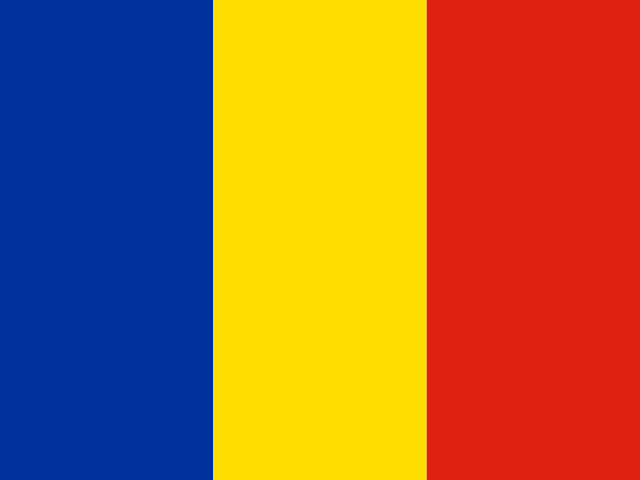 Crime and safety warnings for Romania
Current safety guidance for Romania from UK Foreign Office travel advice. We cover 1 city in Romania, with reported scams for each.
Crime and safety warnings for Romania
Current safety guidance for Romania from UK Foreign Office travel advice. We cover 1 city in Romania, with reported scams for each.
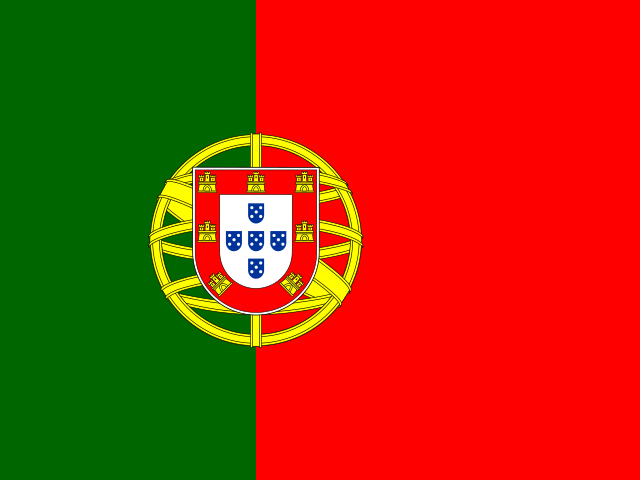 Crime and safety warnings for Portugal
Current safety guidance for Portugal from UK Foreign Office travel advice. We cover 2 cities in Portugal, with reported scams for each.
Crime and safety warnings for Portugal
Current safety guidance for Portugal from UK Foreign Office travel advice. We cover 2 cities in Portugal, with reported scams for each.